In modern machining, accuracy depends on much more than the machine itself. Shops may invest heavily in advanced machining centers, better cutting tools, and improved CAM software, but if the workpiece is not held securely and consistently, those advantages can quickly be lost. That is why workholding remains one of the most important factors in achieving stable and repeatable machining performance.
Among the many workholding solutions available today, the vise is still one of the most widely used. It is simple in concept, but the right vise can make a major difference in machining efficiency, setup time, and part quality. For shops focused on precision production, choosing the right cnc vise is not a minor purchasing decision. It is a practical investment in better process control.
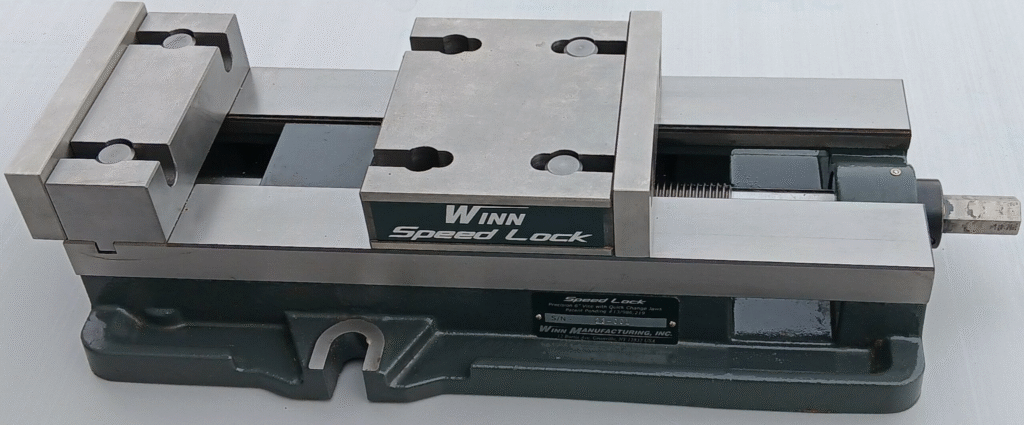
Why the Vise Matters More Than Many Shops Realize
A vise is often treated as a standard accessory, something that simply holds the material in place while the machine does the real work. In reality, the vise has a direct influence on nearly every stage of the machining process. It affects how quickly a setup can be completed, how well the part stays aligned under cutting pressure, and how consistently the same result can be repeated across multiple parts.
If clamping is uneven or unstable, several problems can appear at once. Parts may shift slightly during machining, tool paths may become less reliable, and finished dimensions may drift out of tolerance. These issues often lead to longer inspection time, more manual adjustment, and even scrap. On the other hand, when a workholding system is designed well, machining becomes smoother, more predictable, and easier to standardize.
That is why experienced machinists often say that precision starts with the setup.
Start with the Requirements of the Part
Before selecting any vise, the first step is to understand the actual machining task. Different parts create different demands. A compact precision component may require delicate but accurate clamping, while a larger steel workpiece may need stronger holding force and greater rigidity. Thin-wall parts may need stability without distortion, and complex multi-face machining may require better access around the workpiece.
The ideal vise is not necessarily the biggest or the most expensive one. It is the one that best matches the geometry, material, tolerance level, and production volume of the job. Shops that ignore this step often end up using a general-purpose setup for everything, which may work for some jobs but creates unnecessary limitations for others.
This is especially important in higher-end machining environments where small setup improvements can have a large impact over time.
Clamping Force and Repeatability Should Be Priorities
When comparing different workholding options, clamping force is often the first feature buyers notice. Strong clamping is certainly important, especially when machining harder materials or using more aggressive cutting parameters. However, force alone is not enough. Repeatability is just as important, and in many cases even more valuable in daily production.
A vise that returns parts to a consistent position from one setup to the next saves time and improves reliability. Operators spend less time checking alignment, touching off, or correcting offsets. This becomes a major advantage in batch production, where repeatability directly supports better throughput and more stable quality.
Self-centering designs are particularly useful because they help position the workpiece evenly and consistently. For many precision shops, this makes them a preferred option over older manual setups that rely more heavily on operator adjustment.
Consider Access for Multi-Side Machining
As more manufacturers move toward complex geometries and reduced setup counts, accessibility becomes a key part of vise selection. A traditional vise may hold the work securely, but it can also block access to certain surfaces. This forces operators to reposition the part more often, which increases setup time and creates more opportunity for error.
For multi-face machining, a specialized 5 axis vise can offer a clear advantage. These vises are designed to expose more of the workpiece while maintaining a stable grip. By raising the part and reducing obstruction around the clamping area, they make it easier for the tool to reach different sides in a single setup.
This is one of the main reasons 5-axis workholding has become more popular not only in aerospace and medical manufacturing, but also in general precision machining. When shops can machine more surfaces without re-clamping the part, they reduce cycle interruptions and improve overall consistency.
Material and Construction Quality Should Not Be Overlooked
Another important factor in choosing a vise is the quality of its construction. In a production environment, the vise is exposed to repeated clamping, chip contamination, cutting vibration, and constant handling. If the body material or surface treatment is poor, wear can appear quickly and accuracy may decline over time.
A well-built vise should offer structural rigidity, durable materials, and machining accuracy in its own construction. These features help the vise maintain stable performance under real shop conditions. While lower-cost options may appear attractive at first, they can create hidden costs later through inconsistent clamping, shorter service life, and reduced process reliability.
For shops that machine hard metals or rely on tight tolerances every day, quality construction is not just a premium feature. It is a basic requirement for dependable production.
Think Beyond One Job and Plan for Flexibility
One of the most common mistakes in workholding selection is choosing a vise based only on a single immediate job. While that may solve a short-term need, it does not always support long-term efficiency. A better approach is to choose a system that can adapt to different part sizes, different machine configurations, and changing production requirements.
This is why many buyers prefer to evaluate a full cnc vise range rather than a single model. A broader lineup usually offers more flexibility in jaw width, clamping structure, and application type. That makes it easier to match the right solution to different machining scenarios without having to change suppliers or redesign the setup process from the beginning.
Shops that run mixed production, prototypes, and small batches especially benefit from this kind of flexibility. Instead of treating each job as a separate challenge, they can build a more standardized workholding approach that supports a wider range of parts.
The Right Vise Supports Better Productivity
In the end, a vise should do more than simply hold material. It should support faster setup, better stability, easier machining access, and more consistent results. Those benefits may appear small on one individual part, but across weeks and months of production they add up to meaningful gains in efficiency and profitability.
Choosing the right vise is really about reducing uncertainty. When the workpiece is held securely and repeatably, machinists can focus more on cutting performance and less on setup problems. That leads to better confidence on the shop floor and more reliable output for customers.
As machining standards continue to rise, workholding will only become more important. Shops that take vise selection seriously are often the ones that build stronger processes, achieve better repeatability, and stay more competitive in precision manufacturing.