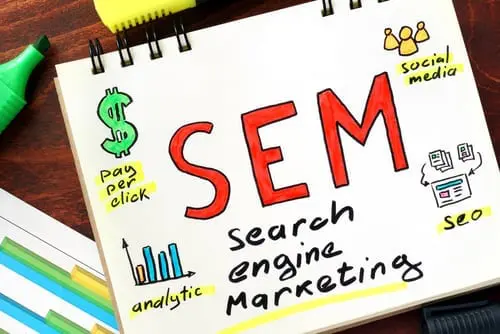
Search Engine Marketing (SEM) is one of the most powerful tools in the digital marketing landscape. With billions of searches conducted online every day, SEM allows businesses to reach potential customers precisely when they are searching for products or services. By leveraging paid advertising on search engines, companies can increase visibility, drive targeted traffic, and ultimately improve conversion rates. For businesses like Gavazzi, understanding SEM can be the difference between being invisible online and becoming a recognized brand in a competitive market.
What is Search Engine Marketing?
Search Engine Marketing is a form of online marketing that involves promoting websites by increasing their visibility on search engine results pages through paid advertising. Unlike Search Engine Optimization (SEO), which focuses on organic rankings, SEM relies on paid strategies such as pay-per-click (PPC) campaigns. The goal is to place ads in front of potential customers who are actively searching for relevant products or services.
One of the key advantages of SEM is its ability to provide immediate results. While SEO may take months to show significant improvements, SEM campaigns can generate traffic within hours of activation. For companies like Gavazzi, this immediacy allows for rapid testing of marketing strategies, helping to understand which keywords and messages resonate with the target audience.
How SEM Works
SEM operates through paid advertising platforms such as Google Ads, Bing Ads, and other search engine networks. Advertisers bid on specific keywords related to their products or services, and when users enter those keywords in a search engine, their ads may appear at the top or bottom of the search results page. The most common pricing model used is pay-per-click, where advertisers are charged only when someone clicks on their ad.
The process of creating a successful SEM campaign begins with keyword research. Identifying the right keywords ensures that ads reach the most relevant audience. Tools like Google Keyword Planner and SEMrush help marketers discover high-traffic, low-competition keywords. For a company like Gavazzi, targeting industry-specific keywords ensures that their ads reach potential customers who are actively looking for their solutions.
Next comes ad creation. Crafting compelling ad copy is crucial for capturing attention in a crowded search results page. The ad must clearly communicate the value proposition, include a strong call-to-action, and align with the search intent of the user. Landing pages that the ads lead to must also be optimized for conversion, providing a seamless experience from search to purchase.
Key Components of SEM
Effective SEM campaigns rely on several core components. The first is keyword strategy. Choosing the right keywords involves balancing search volume, competition, and relevance. Broad keywords may attract a larger audience but can be expensive and less targeted, while long-tail keywords tend to have lower competition and higher conversion rates. Gavazzi can benefit from a mix of both to reach a wider audience while targeting highly qualified leads.
Another critical component is ad quality. Search engines prioritize ads that are relevant to user queries and provide a good user experience. High-quality ads receive better placement and lower costs per click, making it essential for businesses to continually test and optimize ad copy, visuals, and messaging.
Budget management is also crucial in SEM. Companies must allocate their advertising budget strategically, monitoring the performance of each campaign and adjusting bids based on results. Tools like Google Ads provide detailed analytics on impressions, clicks, and conversions, enabling marketers to make data-driven decisions.
Benefits of SEM
Search Engine Marketing offers numerous benefits for businesses looking to grow their online presence. One of the most significant advantages is increased visibility. Paid ads appear at the top of search results, ensuring that the brand is seen by potential customers immediately. This can be particularly valuable for businesses like Gavazzi, which operate in competitive markets and need to stand out.
SEM also allows for precise targeting. Advertisers can tailor campaigns based on location, device, demographics, and even the time of day. This level of targeting ensures that marketing efforts are focused on audiences most likely to convert, improving return on investment.
Another benefit is measurable results. Unlike traditional advertising methods, SEM provides detailed data on campaign performance. Metrics such as click-through rates, conversion rates, and cost per acquisition allow businesses to understand which strategies are effective and which need adjustment. Gavazzi can leverage this data to refine campaigns, reduce wasted spend, and maximize impact.
Common SEM Strategies
There are several strategies businesses use to maximize the effectiveness of their SEM campaigns. One popular approach is retargeting. Retargeting allows advertisers to reach users who have previously visited their website but did not complete a desired action, such as making a purchase or filling out a contact form. By keeping the brand top-of-mind, retargeting increases the likelihood of conversion.
Another strategy is using ad extensions. Ad extensions enhance the visibility and functionality of ads by providing additional information such as phone numbers, location, and site links. These extensions can increase click-through rates and provide a more engaging experience for users. Gavazzi can use ad extensions to highlight specific services, showcase customer testimonials, or provide easy access to contact information.
A third strategy involves A/B testing. Running multiple variations of ads allows marketers to determine which messaging, design, and targeting work best. Continuous testing and optimization are essential to achieving high-performing campaigns and reducing wasted spend.
Challenges in SEM
While SEM offers numerous advantages, it also comes with challenges. One of the primary obstacles is competition. High-demand keywords can be expensive, making it difficult for smaller businesses to compete with larger corporations that have bigger advertising budgets. Companies like Gavazzi must carefully select keywords and optimize campaigns to remain cost-effective.
Another challenge is ad fatigue. Over time, audiences may become desensitized to ads, resulting in declining click-through rates. Regularly updating ad creative and messaging helps maintain engagement and ensures campaigns remain effective.
Finally, managing SEM campaigns requires expertise. From keyword research and ad copywriting to analytics and budget management, the process can be complex and time-consuming. Many businesses choose to work with digital marketing agencies or SEM specialists to achieve the best results.
Measuring SEM Success
Measuring the success of SEM campaigns involves tracking key performance indicators. Click-through rate (CTR) measures how often users click on ads compared to how often they are shown. Conversion rate measures how many users complete a desired action after clicking an ad. Cost per acquisition (CPA) calculates the cost of acquiring a new customer, providing insight into return on investment.
For businesses like Gavazzi, combining these metrics with detailed analytics allows for comprehensive performance evaluation. Understanding which ads, keywords, and targeting strategies deliver the best results enables continuous improvement and sustainable growth.
Future of SEM
The future of SEM is closely tied to advancements in technology and changes in consumer behavior. Artificial intelligence and machine learning are increasingly being used to optimize bidding strategies, predict user intent, and personalize ad experiences. Voice search is also transforming how users find information, requiring marketers to adapt their keyword strategies accordingly.
Moreover, integration with other marketing channels, such as social media and email, allows for a more holistic approach to digital marketing. Businesses that embrace these trends can enhance their SEM efforts and stay ahead of the competition.
Search Engine Marketing remains an essential tool for businesses seeking visibility and growth in the digital age. With strategic planning, effective execution, and continuous optimization, SEM can deliver measurable results, attract highly targeted traffic, and increase conversions. For companies like Gavazzi, understanding the intricacies of SEM is not just an option but a necessity for long-term success. By focusing on keyword strategy, ad quality, and data-driven decision-making, businesses can harness the full potential of SEM and thrive in a competitive online marketplace.