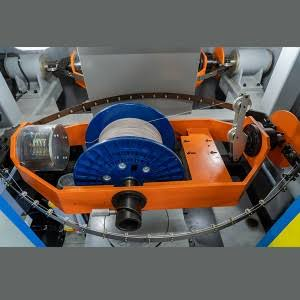
In modern cable manufacturing, producing reliable and high-quality twisted pairs requires accurate machinery and consistent production Back Twist Pair Twisting Machine processes. A Back Twist Pair Twisting Machine is an important piece of equipment for manufacturers producing communication cables, LAN cables, data cables, and other twisted-pair products. Choosing the right machine can directly affect production speed, cable quality, material waste, and overall manufacturing costs.
With different machine designs, capacities, control systems, and technical specifications available, selecting the most suitable option can be challenging. Manufacturers need to consider several factors before investing in equipment. This guide explains the key points to evaluate when choosing a Back Twist Pair Twisting Machine for your production requirements.
Understanding a Back Twist Pair Twisting Machine
A Back Twist Pair Twisting Machine is designed to twist two insulated wires together while controlling the tension and twisting characteristics of the cable. The back-twist mechanism helps manage the internal stress created during the twisting process, allowing manufacturers to produce stable and uniform twisted pairs.
Twisted-pair cables are widely used in networking and communication applications. The quality of the twisting process can influence electrical performance, cable geometry, and consistency. For this reason, manufacturers should select equipment capable of maintaining accurate twisting parameters throughout continuous production.
The machine typically works with wire payoffs, tension-control systems, twisting components, take-up systems, and control units. Depending on the model, manufacturers may also have options for automatic tension adjustment, digital controls, variable-speed operation, and production monitoring.
Identify Your Production Requirements
Before purchasing equipment, the first step is to clearly understand your production requirements. Different factories may have different cable types, wire sizes, production volumes, and quality standards.
Consider the type of cables you plan to manufacture. If your primary products are LAN cables or communication wires, the machine should be compatible with the required conductor and insulation dimensions. You should also determine the number of pairs you need to produce and whether your production line requires continuous operation.
Production volume is another important consideration. A small manufacturer may not need a high-capacity industrial machine, while a large cable factory may require equipment designed for extended production cycles and higher output.
Understanding these requirements helps prevent purchasing equipment that is either insufficient for your needs or unnecessarily expensive.
Check Wire and Cable Compatibility
One of the most important factors when choosing a Back Twist Pair Twisting Machine is its compatibility with your wire materials.
Check the manufacturer’s specifications for supported wire diameters, insulation materials, conductor types, and pair sizes. Some machines are designed for a relatively narrow range of wire specifications, while others offer greater flexibility.
If your factory produces different cable models, choosing a machine with a wider operating range can provide greater production flexibility. It can also reduce the need to purchase separate machines for different cable sizes.
Before making a final decision, provide the machine supplier with detailed information about your wire specifications. This allows the supplier to confirm whether the machine is suitable for your applications.
Evaluate Twisting Accuracy
Twisting accuracy is essential for producing consistent cable pairs. Variations in twist length or tension can affect the physical structure and electrical characteristics of the finished cable.
Look for a machine that provides precise control over twist parameters. The machine should maintain consistent twisting throughout the production process rather than producing significant variations between different sections of the cable.
A reliable control system can help operators adjust twisting speed and other production parameters accurately. Digital displays and programmable controls can also make it easier to monitor and reproduce specific production settings.
For manufacturers producing communication cables, consistent twisting is particularly important because cable performance depends on controlled pair geometry.
Consider Production Speed
Production speed should be evaluated according to your actual manufacturing requirements. A faster machine is not automatically the best choice if it cannot maintain consistent cable quality at higher speeds.
When comparing machines, examine their rated operating speed and determine whether the equipment can maintain stable performance during continuous production.
A good Back Twist Pair Twisting Machine should provide a suitable balance between speed and quality. Variable-speed control can be particularly useful because operators can adjust the machine according to the material, cable specification, and production requirements.
Manufacturers should also consider how quickly the machine can be prepared for a new production run. Easy setup and adjustment can reduce downtime between different cable types.
Examine Tension Control
Wire tension is another critical factor in pair twisting. Uneven tension can cause irregular twisting, deformation, or instability in the finished cable.
A machine with an effective tension-control system can help maintain consistent wire movement during production. This becomes increasingly important at higher operating speeds.
When evaluating equipment, ask about the type of tension-control mechanism used and how easily operators can adjust it. Automatic or precision-controlled tension systems can improve production consistency and reduce the need for frequent manual adjustments.
Stable tension also contributes to smoother machine operation and can help minimize material waste.
Look at Machine Construction and Durability
Industrial cable equipment is expected to operate for long periods, so construction quality should be carefully considered. Examine the machine frame, rotating components, bearings, motors, electrical components, and other major parts.
A robust machine can provide reliable performance under demanding production conditions. High-quality components may also reduce maintenance requirements and unexpected downtime.
Do not focus only on the initial purchase price. Consider the machine’s expected service life, maintenance requirements, replacement-part availability, and operating costs. A slightly more expensive machine may provide better long-term value if it offers greater reliability and lower maintenance expenses.
Consider Automation and Control Features
Modern cable manufacturing machines often include advanced control systems that simplify operation and improve production monitoring.
Depending on your requirements, useful features may include digital parameter displays, programmable controls, variable-frequency drives, automatic tension control, fault alarms, and production monitoring systems.
Automation can reduce operator workload and make production settings more repeatable. It can also help manufacturers identify problems quickly when the machine detects abnormal operating conditions.
However, automation should match your actual production needs. Smaller operations may prefer a simpler machine that is easier to operate and maintain, while larger factories may benefit from more advanced automation.
Check Maintenance Requirements
Maintenance is an important part of machine ownership. Before buying a Back Twist Pair Twisting Machine, determine how frequently major components need inspection, lubrication, adjustment, or replacement.
Ask the supplier whether replacement parts are readily available and whether technical support is provided. Easy access to serviceable components can reduce maintenance time.
You should also consider operator training. A machine with straightforward controls and accessible maintenance points can make routine servicing easier for production teams.
A preventive maintenance schedule can help identify worn components before they cause major production problems.
Compare Energy Consumption
Energy efficiency can have a significant effect on long-term operating costs, especially in factories where machines operate for many hours every day.
Compare the motor power and energy requirements of different models. Efficient motors and modern drive systems can help reduce unnecessary energy consumption while maintaining appropriate production performance.
When calculating the total cost of ownership, include electricity usage along with maintenance, replacement parts, labor, and expected machine lifespan.
Evaluate Supplier Support
The machine supplier is almost as important as the machine itself. Reliable technical support can make a major difference when installing, operating, or maintaining production equipment.
Choose a supplier that can provide clear technical documentation, installation guidance, operator training, troubleshooting assistance, and replacement parts.
Ask about warranty coverage and after-sales service before purchasing. It is also useful to confirm whether the supplier has experience with the specific type of cable production you are planning.
A supplier that understands twisted-pair cable manufacturing can often provide more useful recommendations regarding machine configuration and production parameters.
Calculate the Total Cost of Ownership
Price should not be the only factor in your purchasing decision. Instead, calculate the total cost of owning and operating the machine.
Consider the initial equipment price, installation costs, energy consumption, maintenance expenses, replacement parts, labor requirements, and expected production output.
A machine with a lower purchase price may become more expensive if it requires frequent maintenance or produces more material waste. Conversely, a well-built machine with higher initial costs may provide better value through reliable operation and consistent production.
Test the Machine Before Purchase
Whenever possible, request a demonstration or production test before making a final decision. Testing allows you to evaluate actual machine performance using your materials and cable specifications.
During the test, observe twisting consistency, wire tension, operating speed, noise, machine stability, control-system usability, and finished cable quality.
Ask the supplier to demonstrate the machine using the wire sizes and materials you intend to use. This provides much more useful information than relying solely on specifications listed in a product brochure.
Final Thoughts
Choosing the right Back Twist Pair Twisting Machine requires careful evaluation of production requirements, wire compatibility, twisting accuracy, operating speed, tension control, machine durability, automation, maintenance, energy consumption, and supplier support.
The best machine is not necessarily the fastest or least expensive option. Instead, it should provide reliable performance, consistent twisting quality, manageable operating costs, and sufficient flexibility for your manufacturing needs.
By comparing technical specifications and testing equipment before purchase, cable manufacturers can make a more informed investment. A properly selected Back Twist Pair Twisting Machine can improve production consistency, reduce waste, support efficient manufacturing, and contribute to the long-term quality of twisted-pair cable products.